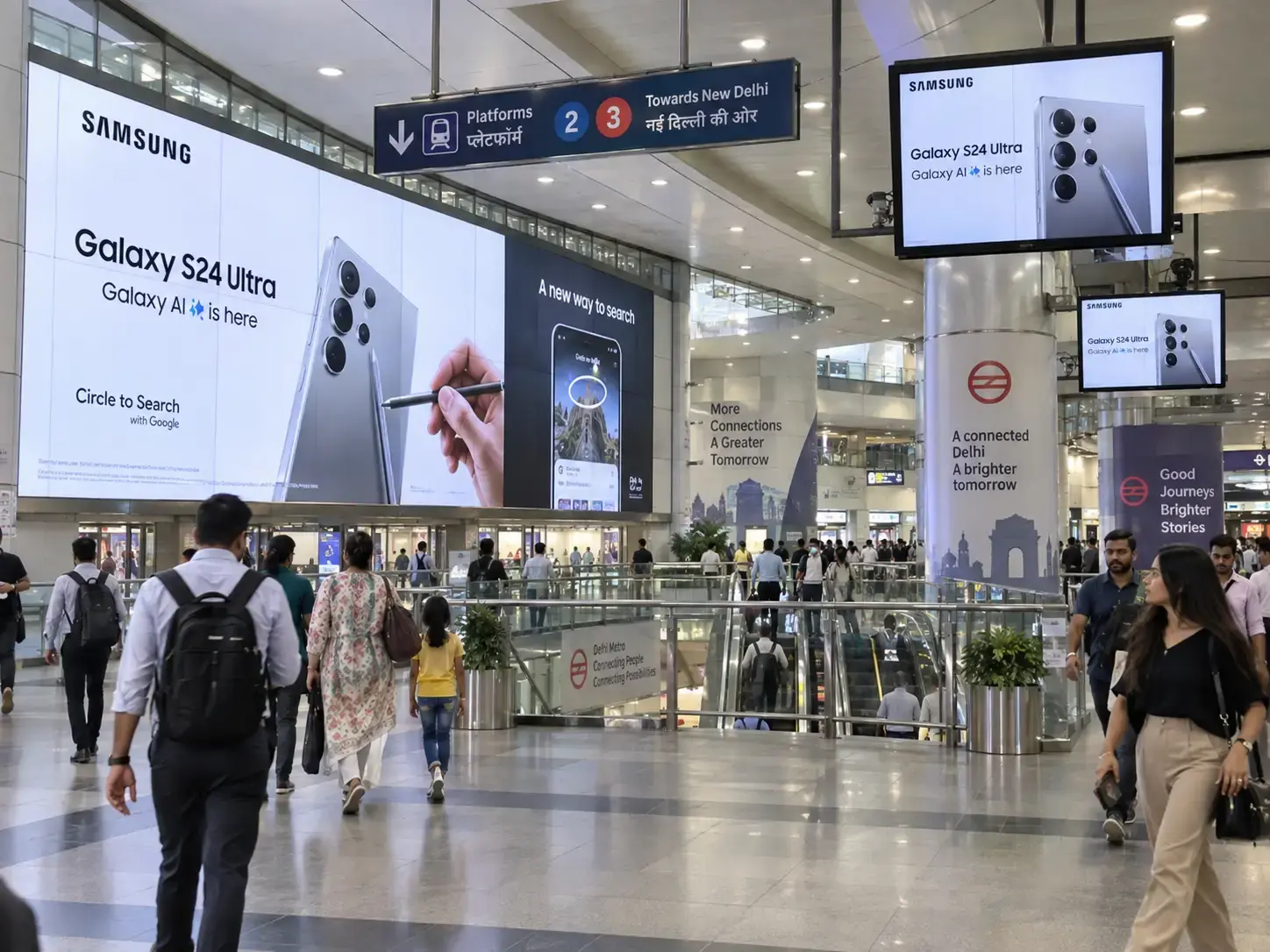
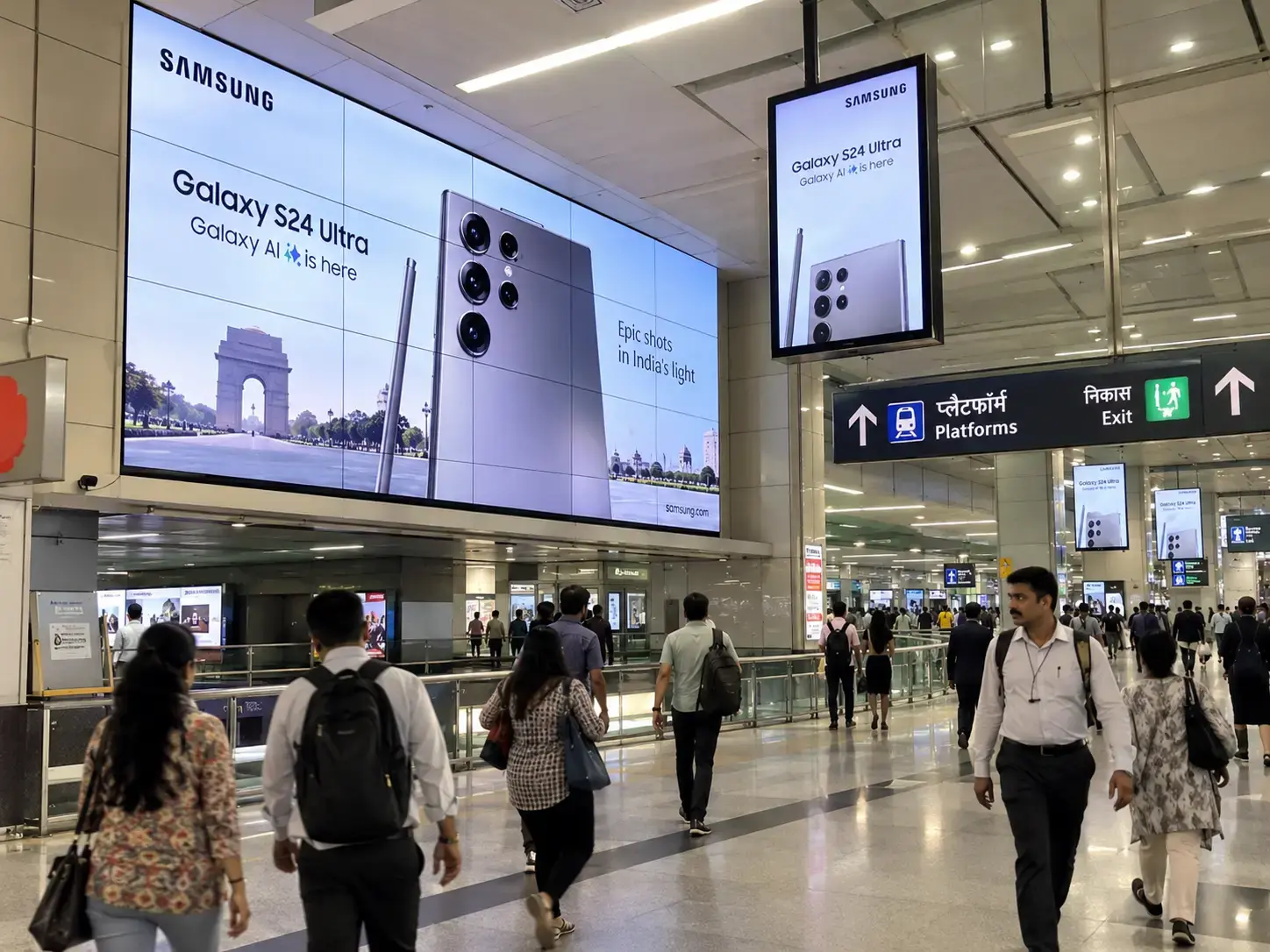
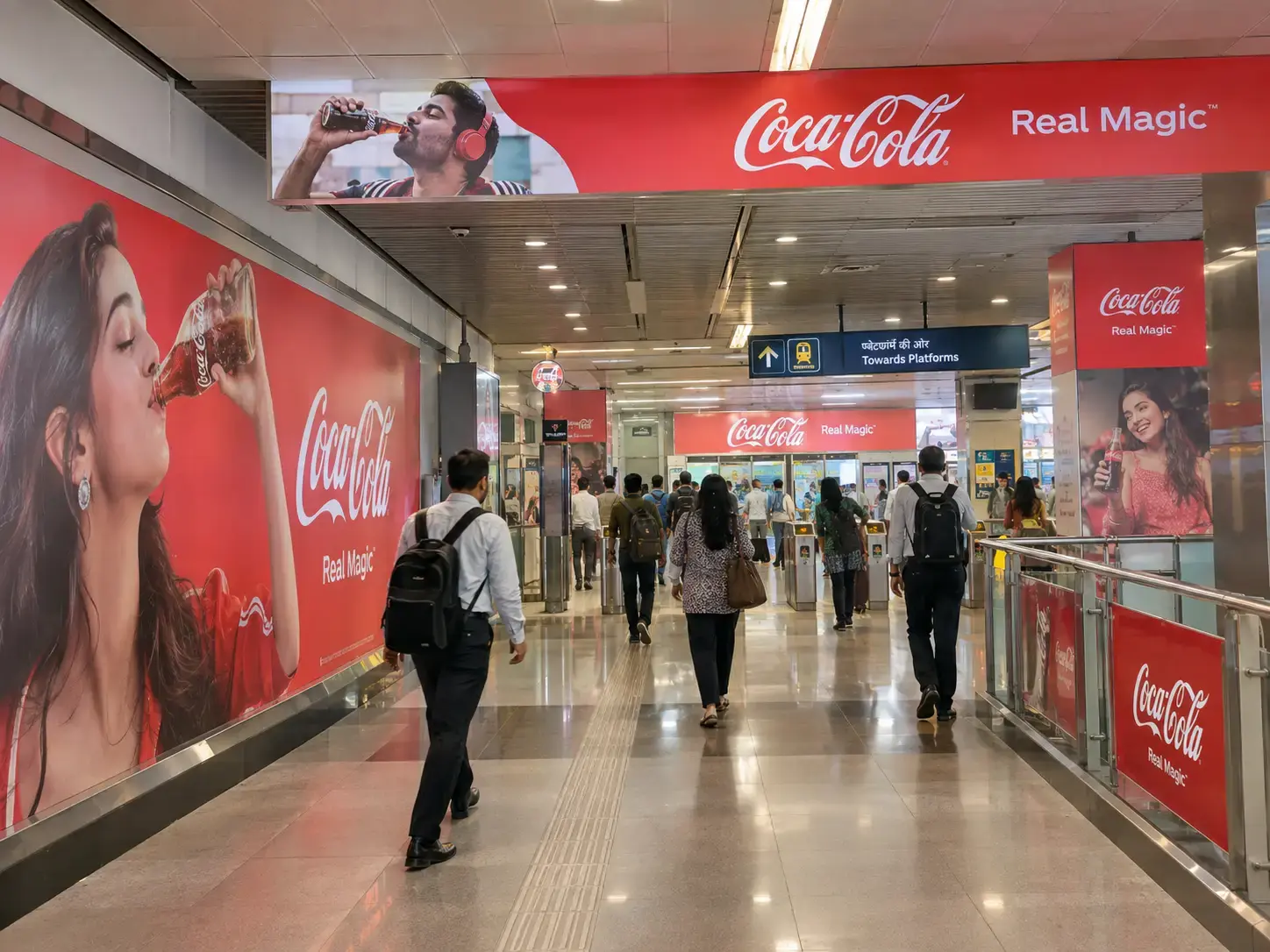
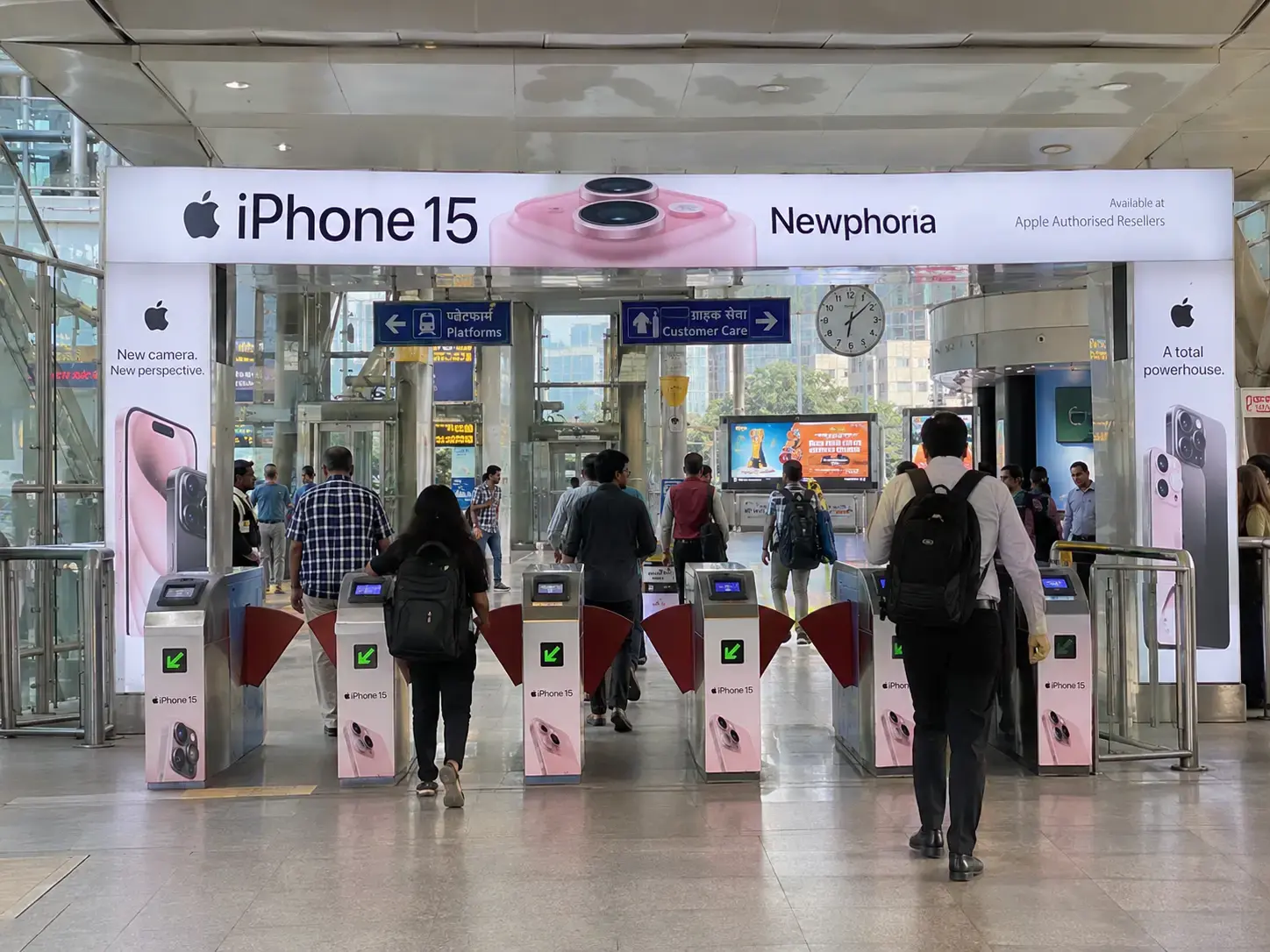
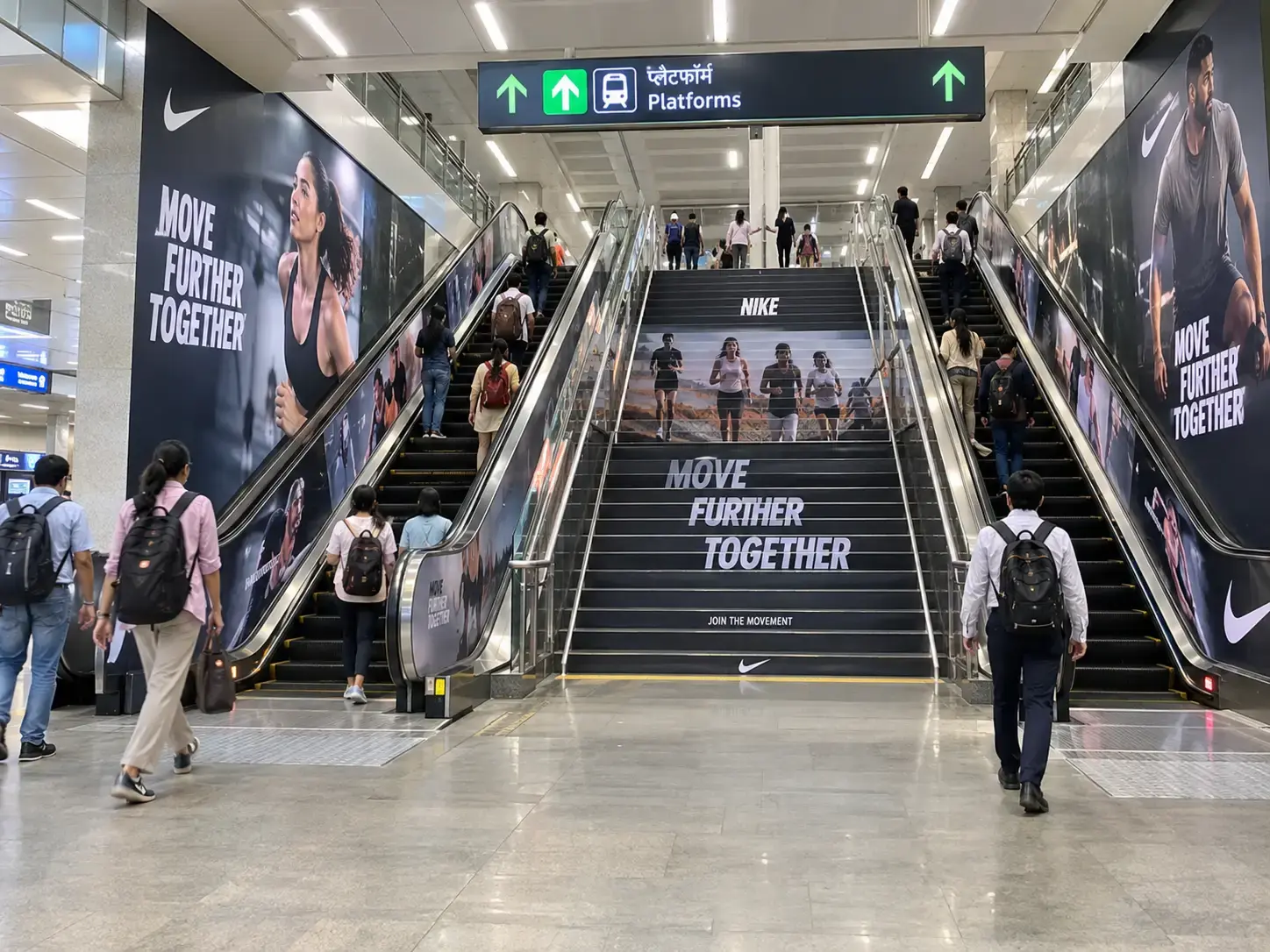
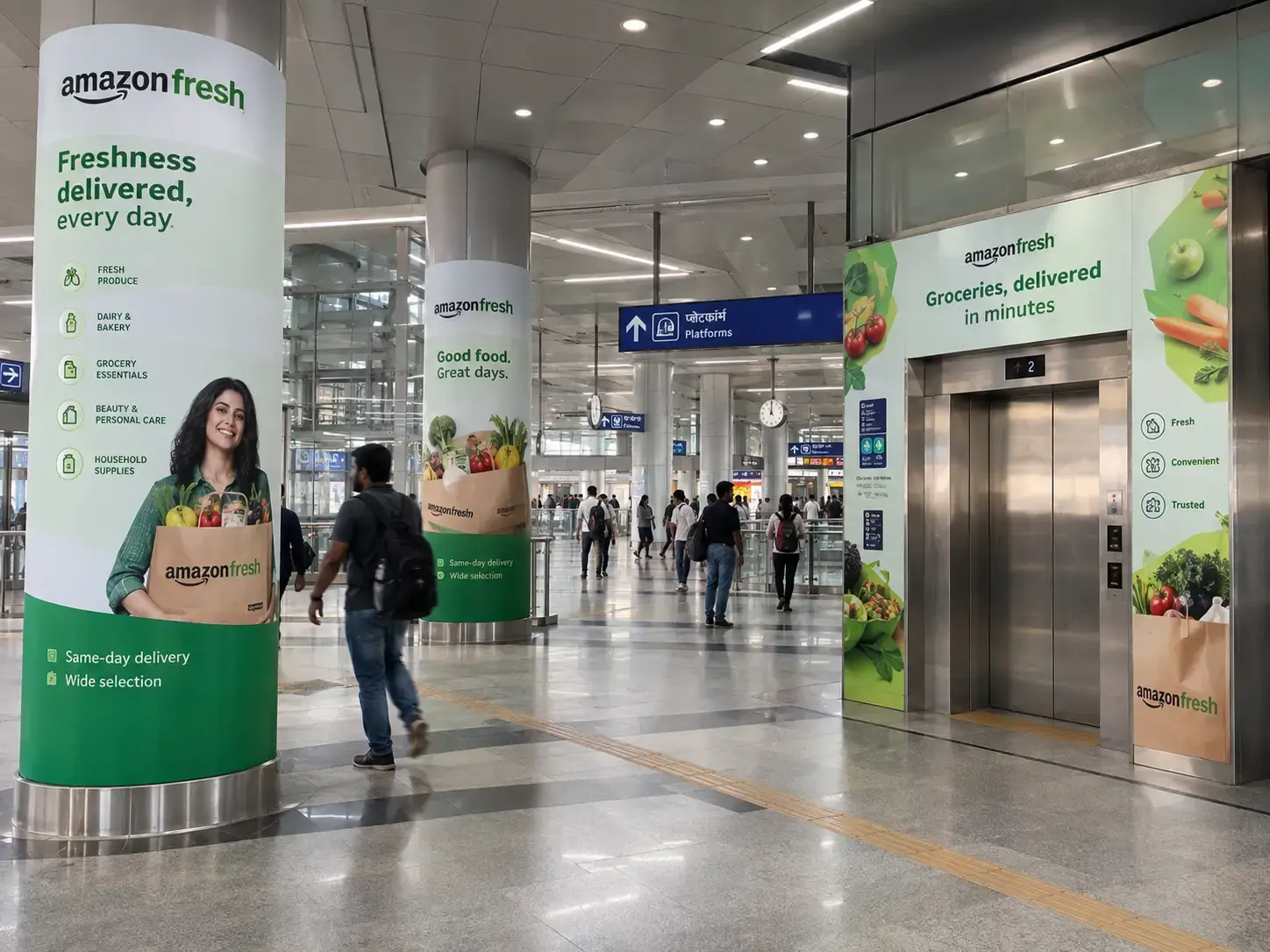
Launch high-visibility metro station advertising campaigns across one of India's most connected metro ecosystems, linking central business districts, universities, residential hubs, railway terminals, airports and NCR commuter corridors. Use platform panels, digital screens, concourse branding, entry and exit media, escalator branding and activation spaces to reach commuters throughout the station journey. EraZero AI helps brands plan, activate, monitor and optimize metro advertising in Delhi using location intelligence, audience-led station selection, multi-format planning, campaign coordination and transparent reporting. Build a focused station campaign or scale across multiple metro corridors from one media-planning workflow.
Delhi Metro Station Advertising
A snapshot of formats, audiences, campaign types and priority metro stations for advertising in Delhi.
Digital screens, backlit and static panels, platform branding, concourse media, entry/exit branding, escalator branding, pillars, kiosks and station takeovers.
Brand awareness, app launches, product promotions, retail campaigns, recruitment, real estate, education, BFSI and commuter-focused acquisition.
Single-station branding, multi-station networks, digital metro campaigns, platform media, experiential activations and high-frequency transit advertising.
Rajiv Chowk, Kashmere Gate, New Delhi, Hauz Khas, Delhi Aerocity, Central Secretariat, Mandi House, Lajpat Nagar, Janakpuri West and Dwarka Sector 21.
Delhi Metro station advertising gives brands access to a broad cross-section of the capital's daily commuters, from office professionals and students to shoppers, tourists, government employees and airport travellers. Interchange stations and central-city hubs create especially strong dwell-time and repeated exposure opportunities. Advertising in metro stations in Delhi can include static and backlit panels, digital displays, concourse media, platform advertising, lift and pillar branding, escalator panels, kiosks and larger station-branding packages. The right mix depends on passenger movement, dwell time, station architecture, inventory availability and campaign objective. EraZero AI supports metro station branding in Delhi from location discovery and audience mapping to media comparison, creative planning, campaign coordination and reporting. Exact media availability is subject to the relevant metro operator, concessionaire, station permissions and campaign period.
Delhi's metro network connects high-value business, retail, education and residential catchments across a large urban geography. Interchange stations concentrate passengers from multiple corridors, creating repeated visibility among varied audience segments. Central Delhi, airport-linked and South Delhi stations are particularly useful when brands need premium commuter reach or citywide awareness.
Daily metro journeys in Delhi create repeated commuter exposure across entry, concourse, platform and interchange touchpoints.
Station environments provide longer dwell time than many roadside formats, giving commuters more opportunity to notice campaign messages.
Brands can select stations based on nearby offices, malls, universities, residential clusters, railway hubs or airport connectivity.
Digital and static station media can support both broad brand awareness and focused micro-market campaigns.
A multi-station plan across Delhi can increase route coverage and frequency while keeping media concentrated around relevant commuter audiences.
EraZero AI helps brands compare metro station advertising formats in Delhi based on station layout, passenger flow, dwell time, visibility and campaign objective.
High-brightness digital screens in concourses, paid areas and waiting zones can deliver motion-led brand messages and campaign rotations where inventory is available.
Large wall panels, overhead media and circulation-zone branding help brands remain visible as commuters move between gates, platforms and interchange areas.
Media near station entry/exit points, AFC zones and approach areas can influence both inbound and outbound commuter flows.
Escalator side panels, staircase risers and directional-path branding create sequential visibility while passengers move between levels.
Columns, lift doors and vertical structures can be used for close-range, high-frequency brand presence in station circulation areas.
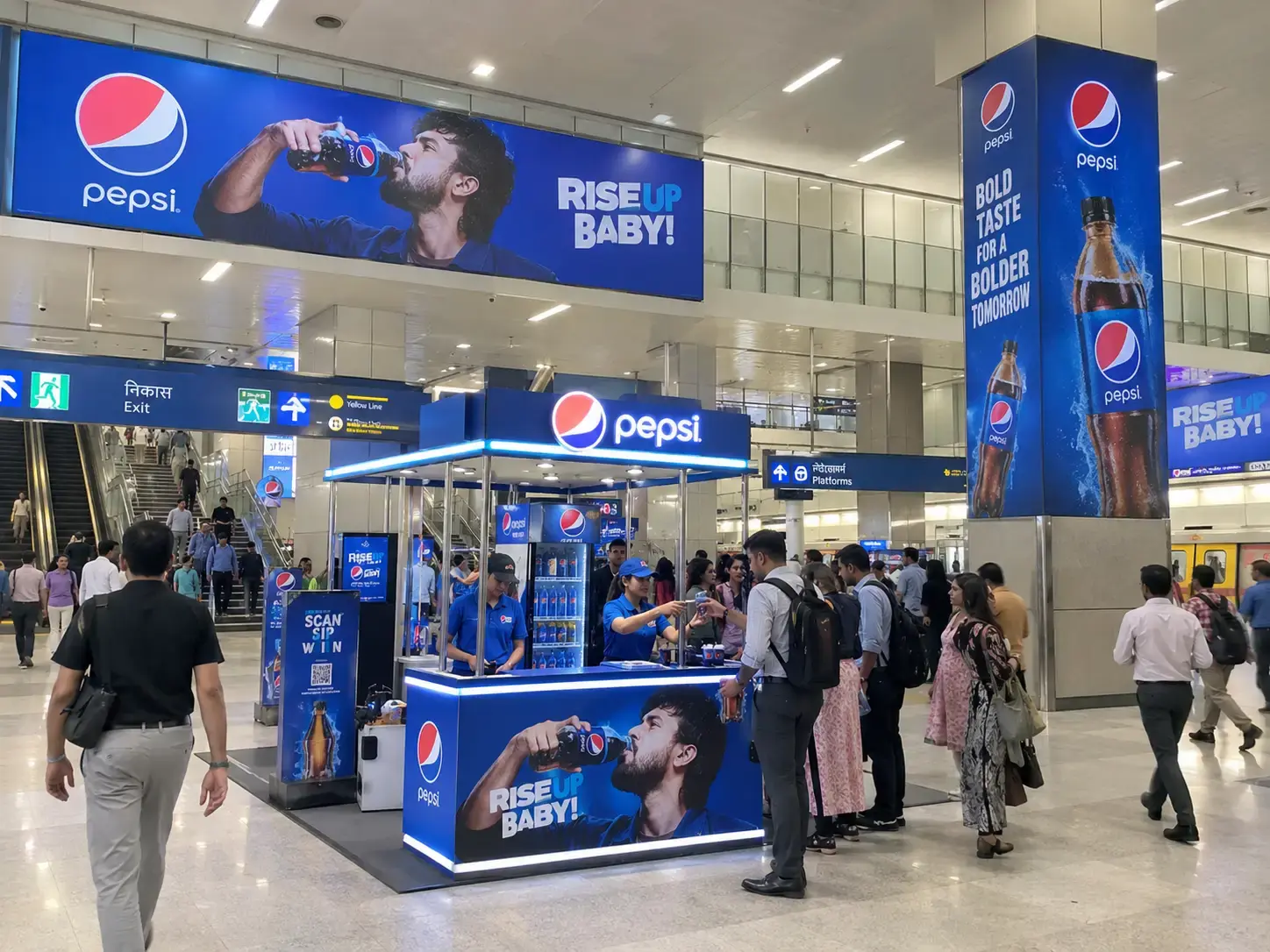
Promotional kiosks, sampling spaces, experiential setups and multi-asset station takeovers can support launches, lead generation and immersive campaigns, subject to operator approvals.
The best metro stations for advertising in Delhi depend on passenger profile, interchange value, nearby commercial activity, commuter volume, sightlines and the brand's target audience. The stations below are priority planning locations; exact advertising inventory and availability should be confirmed before booking.
Best audience:
Office-goers, shoppers, tourists, young professionals and city-centre commuters
Recommended campaigns:
Consumer technology, BFSI, fashion, food, entertainment and mass brand awareness
Best audience:
Intercity travellers, students, office commuters and broad mass audiences
Recommended campaigns:
Telecom, FMCG, education, payments, travel and public-awareness campaigns
Best audience:
Business travellers, railway passengers, tourists and office professionals
Recommended campaigns:
Travel, fintech, hospitality, premium retail and national campaigns
Best audience:
Students, professionals, premium residents and young urban consumers
Recommended campaigns:
Edtech, fashion, D2C, electronics, food and app campaigns
Best audience:
Business travellers, airport users, hospitality audiences and premium consumers
Recommended campaigns:
Luxury, travel, airlines, BFSI, enterprise and premium auto
Best audience:
Government employees, professionals and central-city commuters
Recommended campaigns:
BFSI, telecom, civic communication, technology and brand awareness
Best audience:
Office-goers, students, theatre audiences and government staff
Recommended campaigns:
Education, events, media, consumer services and urban awareness
Best audience:
Shoppers, families, office commuters and young adults
Recommended campaigns:
Retail, fashion, healthcare, food, beauty and hyperlocal campaigns
Best audience:
Families, students, office commuters and local shoppers
Recommended campaigns:
Education, healthcare, retail, finance and app acquisition
Best audience:
Airport-linked commuters, professionals, families and business travellers
Recommended campaigns:
Travel, real estate, finance, education and premium services
Metro station advertising cost in Delhi varies by station category, media format, panel size, exact placement, campaign duration, inventory demand and the number of stations selected. Premium interchange, business-district, airport-linked and railway-connected stations generally attract higher rates because they offer stronger passenger volumes, audience quality or dwell opportunities. EraZero AI helps brands compare metro advertising options in Delhi around campaign objectives and budget rather than treating all station inventory as one standard rate. Final media plans should account for the space cost together with printing, fabrication, installation, digital-screen specifications, kiosk production, manpower and required approvals.
| Factor | How it affects cost |
|---|---|
| Station Category | Interchange, business-district, airport-linked and railway-connected stations typically command higher rates than secondary stations. |
| Media Format | Digital screens and experiential/kiosk formats generally cost more than static or backlit panels. |
| Panel Size & Placement | Larger formats and higher-visibility placements within the station (concourse, platform, entry) increase cost. |
| Campaign Duration | Longer bookings typically reduce the effective daily/weekly rate but increase total campaign spend. |
| Number of Stations | Multi-station campaigns can improve overall value through negotiated network pricing. |
| Production & Installation | Printing, fabrication, digital-screen specifications, kiosk production and manpower add to the base media cost. |
Six reasons brands use metro station advertising in Delhi for high-frequency transit visibility and targeted urban reach.
Passengers spend meaningful time waiting, walking and changing levels, giving brands more opportunity to be noticed than many fast-passing outdoor formats.
Regular commuters often use the same stations several times each week, supporting familiarity and message recall.
Stations can be selected around corporate districts, retail hubs, universities, airports, residential clusters or railway connections.
A campaign can combine screens, panels, pillars, escalators, entry media and kiosks within one commuter journey.
Metro environments work well for app launches, product sampling, lead collection, QR-led offers and citywide announcements.
Brands can start with one premium station and expand across multiple lines or city zones as budget and campaign objectives grow.
Metro advertising in Delhi is suitable for brands that want to reach working professionals, students, shoppers, families, business travellers and frequent urban commuters in a structured transit environment.
Promote smartphones, electronics, apps, subscriptions and digital services among frequent urban commuters.
Reach salaried professionals and transaction-ready audiences with banking, cards, insurance, investment and payment products.
Support product launches, store offers, new collections, sampling and everyday consumer campaigns.
Promote residential and commercial projects around metro-connected micro-markets and commuter corridors.
Reach students, parents and working professionals with admissions, courses, coaching and upskilling programs.
Build awareness for hospitals, diagnostics, insurance, wellness brands and preventive-health campaigns.
Create buzz for films, streaming releases, concerts, exhibitions, sports and cultural events.
Promote vehicle launches, EVs, ride-hailing, airlines, hotels, travel apps and last-mile mobility services.
EraZero AI helps brands simplify metro station advertising in Delhi from station discovery and media planning to execution coordination and reporting.
Identify relevant metro stations and media opportunities based on location, commuter profile, campaign objective and available inventory.
Map corporate districts, retail hubs, residential zones, universities and transport interchanges to the right stations.
Compare digital screens, platform panels, concourse media, pillar branding, escalator branding and promotional spaces.
Manage media selection, creative specifications, approvals, production schedules and deployment across multiple stations.
Adapt the message by station type, commuter segment, campaign phase or micro-market without losing brand consistency.
Track station lists, inventory status, schedules, creatives and execution checkpoints from one workflow.
Access structured proof-of-execution, station coverage summaries and post-campaign reporting for campaign review.
From commuter awareness to product launches, the following campaign types show how brands can use metro station advertising in Delhi to support measurable marketing goals.
Planning and booking metro advertising in Delhi becomes easier with EraZero AI. Identify relevant stations, compare available formats, organize campaign schedules, coordinate creative deployment and manage multi-station activity from a centralized workflow.
Start Your Delhi Metro CampaignEraZero AI helps brands plan and execute metro station advertising campaigns across Delhi and other major Indian metro markets.
Common questions about metro station advertising cost, formats, locations and campaign planning in Delhi.
Plan and execute high-impact metro station advertising campaigns in Delhi with EraZero AI. Discover relevant commuter hubs, compare station media formats, manage campaigns centrally and build repeated urban visibility with audience-led planning.