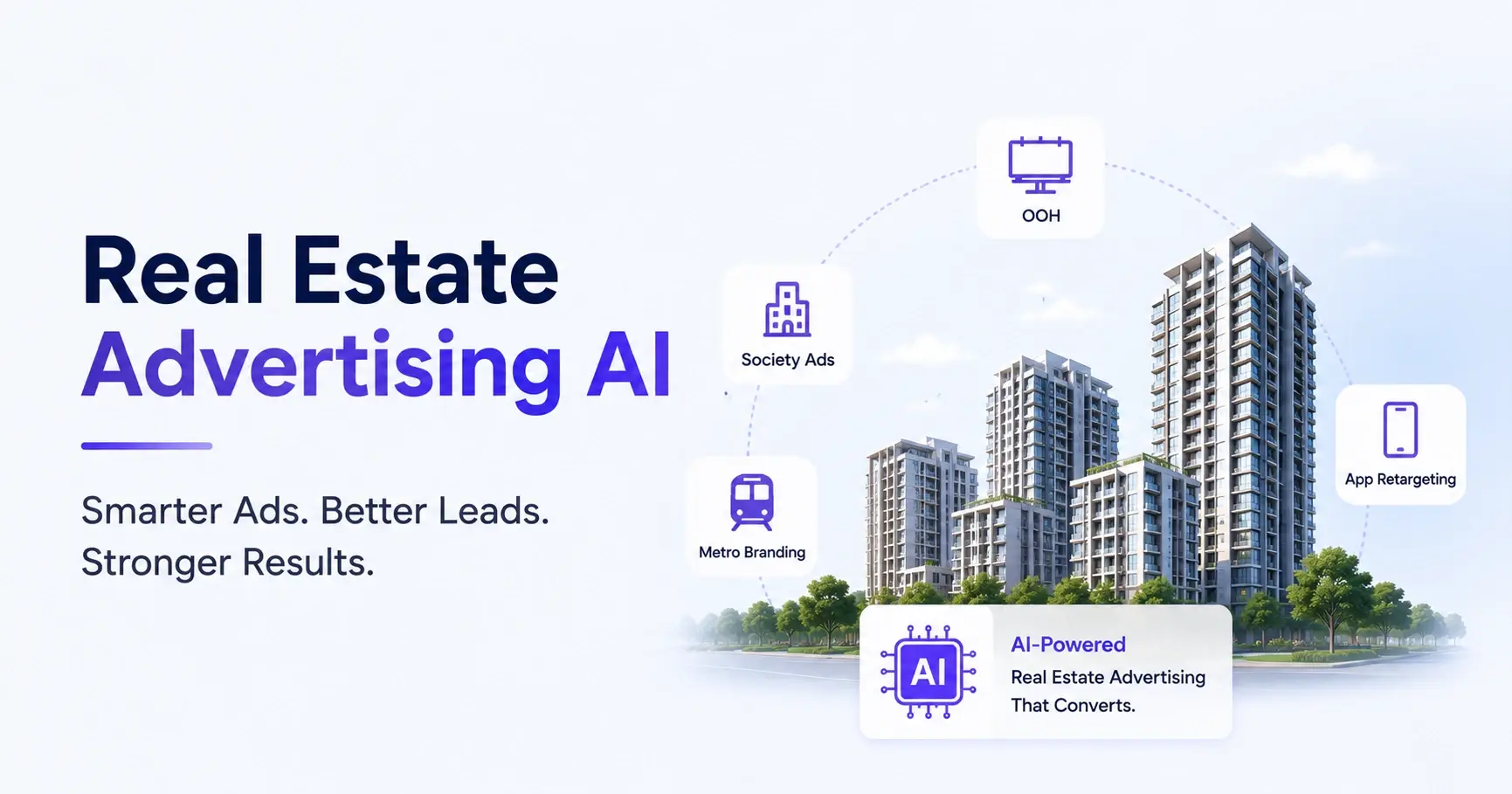
Real Estate Advertising with AI: OOH, Society, Metro and App Retargeting
Real estate advertising has changed significantly in the last few years. Earlier, developers depended mainly on newspaper ads, hoardings, broker networks, and walk-in enquiries. Today, property buyers move across both offline and digital touchpoints before making a decision. They see a billboard on the road, notice a project ad near their society, travel past metro branding, search online, compare properties on apps, and later respond to a retargeting ad.
This is why real estate advertising with AI is becoming important for developers and property portals. Steve AI helps brands plan smarter campaigns, choose the right locations, target relevant audiences, generate better creatives, and improve lead quality. Instead of treating OOH, society ads, metro branding, and app retargeting as separate activities, AI helps connect them into one structured lead generation journey.
For real estate developers, the goal is not just visibility. The real goal is qualified enquiries from buyers who are interested, location-relevant, and ready to take the next step.
Why Real Estate Brands Need Smarter Advertising
Buying a home is a high-consideration decision. People do not usually see one ad and immediately book a property. They need repeated exposure, location familiarity, trust, project recall, and strong reasons to enquire.
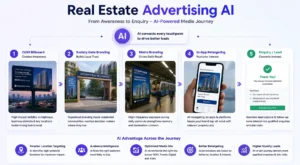
A buyer may first notice a project through an outdoor hoarding near a business district. Later, they may see the same project branding near their residential society. On their metro commute, they may notice another ad. Finally, when they browse a property app or mobile app, retargeting reminds them to enquire.
This is where a multi-channel advertising strategy works better than a single-channel campaign. Real estate brands need visibility, frequency, location targeting, and digital follow-up. AI makes this process more efficient.
How AI Helps Real Estate Lead Generation
AI can improve real estate advertising by helping marketers answer key questions:
Which locations should we target?
Which audience segment is most relevant?
Should the campaign focus on luxury buyers, first-time homebuyers, investors, or renters?
Which media mix will create the best impact?
How can offline visibility be connected with digital retargeting?
EraZero’s Steve AI works as a marketing campaign strategist that can help brands plan campaigns based on objective, audience, location, and budget. For real estate brands, Steve AI can support campaign planning across OOH, DOOH, in-app ads, transit media, retail media, and other channels. This helps developers move from broad campaign ideas to structured media planning.
Instead of manually comparing every media option, real estate marketers can use AI to create a smarter campaign plan and then refine it with human strategy.
OOH Advertising for Real Estate Visibility
OOH advertising remains one of the strongest formats for real estate brands. Hoardings, billboards, gantries, digital screens, and high-street outdoor placements help create awareness in specific catchment areas.
For a residential project, OOH can be placed near IT parks, office corridors, highways, metro routes, premium residential zones, and competitor project clusters. For a commercial property, OOH can work well near business hubs, airports, financial districts, and high-traffic roads.
The benefit of OOH advertising is strong local recall. When buyers repeatedly see a project name in the same area where they live, work, or commute, the brand feels more familiar. AI can improve OOH planning by helping identify high-impact locations based on audience movement, project location, campaign goal, and budget.
Society Ads for Hyperlocal Buyer Targeting
Society ads are powerful because they reach people inside residential communities. For real estate developers, this is useful when targeting families, working professionals, upgraders, and local buyers who may already be interested in moving within the same region.
Society advertising can include lift branding, lobby posters, gate branding, notice board ads, digital screens, standees, and event-based activations. These formats work well because they appear in trusted residential spaces and are seen repeatedly by residents.
For example, a premium apartment project can target societies where residents may be looking to upgrade. A plotted development can target families in dense urban apartments who may want larger living spaces. A rental or resale platform can target societies with high movement and tenant demand.
AI helps society ads become more strategic by identifying the right residential clusters, matching project type with buyer profile, and connecting society-level visibility with app retargeting.
Metro Branding for Daily Commuter Recall
Metro branding is another effective format for real estate advertising. Metro stations, train wraps, platform panels, escalator branding, and inside-train ads reach daily commuters with high frequency.
For real estate brands, metro branding is useful because many buyers consider commute time before choosing a property. A project near a metro corridor can use metro media to highlight location advantage, travel convenience, nearby business hubs, and lifestyle benefits.
For example, a developer promoting a project near a metro station can use metro branding to communicate “10 minutes from your office corridor” or “homes connected to the city’s fastest commute route.” This message works because it reaches people while they are actively thinking about travel and convenience.
AI can help select metro routes and stations based on audience movement, project location, buyer profile, and campaign objective.
App Retargeting for Lead Conversion
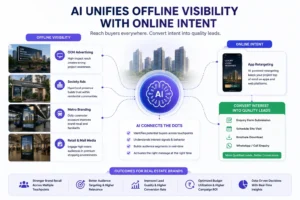
Offline visibility creates awareness, but digital retargeting helps convert attention into enquiries. This is where app retargeting becomes important.
A buyer who sees a billboard may not immediately call. But if the same person later sees an in-app ad, display banner, or property-related ad on mobile, the campaign becomes more memorable. App retargeting helps real estate brands stay visible after the first offline impression.
For property portals, app retargeting can bring users back to project listings. For developers, it can push site visit bookings, brochure downloads, WhatsApp enquiries, virtual tours, or lead forms.
AI can improve retargeting by helping define audience segments, creative messaging, timing, and follow-up strategy. Instead of running generic ads, brands can create more relevant messages based on location, project type, price range, and buyer intent.
The Ideal AI-Powered Real Estate Media Mix
A strong real estate campaign should not depend on one channel. It should combine multiple formats based on the buyer journey.
An AI-powered real estate media mix may include:
OOH advertising for large-scale visibility
Society ads for hyperlocal residential targeting
Metro branding for commuter frequency
In-app ads for digital reach
App retargeting for lead conversion
Retail or mall media for premium audience exposure
Digital creatives for performance tracking and enquiry generation
EraZero’s platform supports multi-channel advertising across formats such as OOH, transit media, in-app ads, retail, TV, radio, cinema, print, and more. For real estate brands, this kind of unified planning helps reduce fragmented execution and makes campaign management easier.
How Steve AI Can Help Real Estate Brands
Steve AI can support real estate campaign planning by acting like an AI campaign strategist. A marketer can define the project type, location, audience, objective, and budget. Steve AI can then help structure the campaign plan, suggest a media mix, and guide the brand toward the right advertising channels.
For example, a luxury apartment project may need premium OOH locations, society ads in high-income residential areas, and retargeting on lifestyle or property apps. A mid-segment housing project may need metro branding, highway billboards, and in-app ads targeting working professionals. A property portal may need city-level awareness and retargeting to bring users back to listings.
This makes campaign planning faster and more focused.
Benefits of AI in Real Estate Advertising
AI helps real estate brands generate better leads by improving every stage of the campaign.
It improves location selection by identifying high-intent catchments.
It improves targeting by matching audience profiles with media channels.
It improves creative planning by suggesting relevant messages for each format.
It improves budget allocation by creating a stronger media mix.
It improves retargeting by keeping the brand visible after offline exposure.
It improves execution by bringing planning and campaign management into one workflow.
For developers and property portals, this means less guesswork and more strategic advertising.
Real Estate Advertising AI
Real estate advertising is no longer only about placing hoardings or running digital ads. Buyers move across multiple touchpoints before they enquire. They notice OOH ads, see society branding, travel through metro stations, browse apps, and respond to retargeting messages.
With real estate advertising AI, developers and property portals can connect these touchpoints into one smarter lead generation strategy. OOH builds visibility, society ads create hyperlocal trust, metro branding improves daily recall, and app retargeting converts interest into enquiries.
With Steve AI as a marketing campaign strategist, EraZero helps real estate brands plan better media mixes, target the right locations, and launch multi-channel campaigns faster. For real estate marketers, the future of lead generation is not just more advertising. It is smarter, AI-powered advertising.