Media planning has always been one of the most important parts of advertising. Before a brand launches a campaign, it needs to decide where to advertise, who to target, how much to spend, what creative to use, and how to measure results. For years, this process depended on manual research, spreadsheets, vendor calls, historical assumptions, and human experience.
Today, the rise of the AI campaign generator is changing how CMOs, media buyers, and agencies approach campaign planning. With AI-powered tools like Steve AI, brands can move from slow, fragmented planning to faster, smarter, and more automated campaign execution.
But does that mean AI campaign planning is better than manual planning? The answer depends on how both methods are used.
What Is Traditional Media Planning?
Traditional media planning is the manual process of selecting advertising channels, estimating reach, allocating budgets, coordinating with vendors, preparing creatives, and launching campaigns. This method usually involves media planners, brand teams, creative teams, sales representatives, and multiple rounds of approvals.
In traditional media planning, teams often rely on past campaign performance, market knowledge, vendor recommendations, audience assumptions, and rate cards. This approach has value because it brings human experience, negotiation skills, local market understanding, and strategic judgment into the planning process.
However, traditional planning can also be time-consuming. A media buyer may need to compare OOH locations, check transit media availability, coordinate in-app ad options, prepare creative briefs, and manually build a media plan before the campaign can even begin.
What Is an AI Campaign Generator?
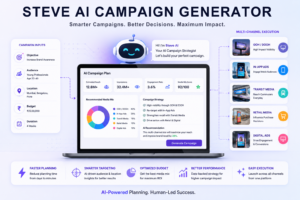
An AI campaign generator is a tool that uses artificial intelligence to help create advertising campaigns faster. It can analyze campaign goals, target audiences, budget, location, channel preferences, and creative requirements to suggest a structured campaign plan.
Instead of starting from a blank spreadsheet, marketers can use AI to generate campaign ideas, recommend media formats, suggest audience segments, support creative planning, and simplify campaign execution.
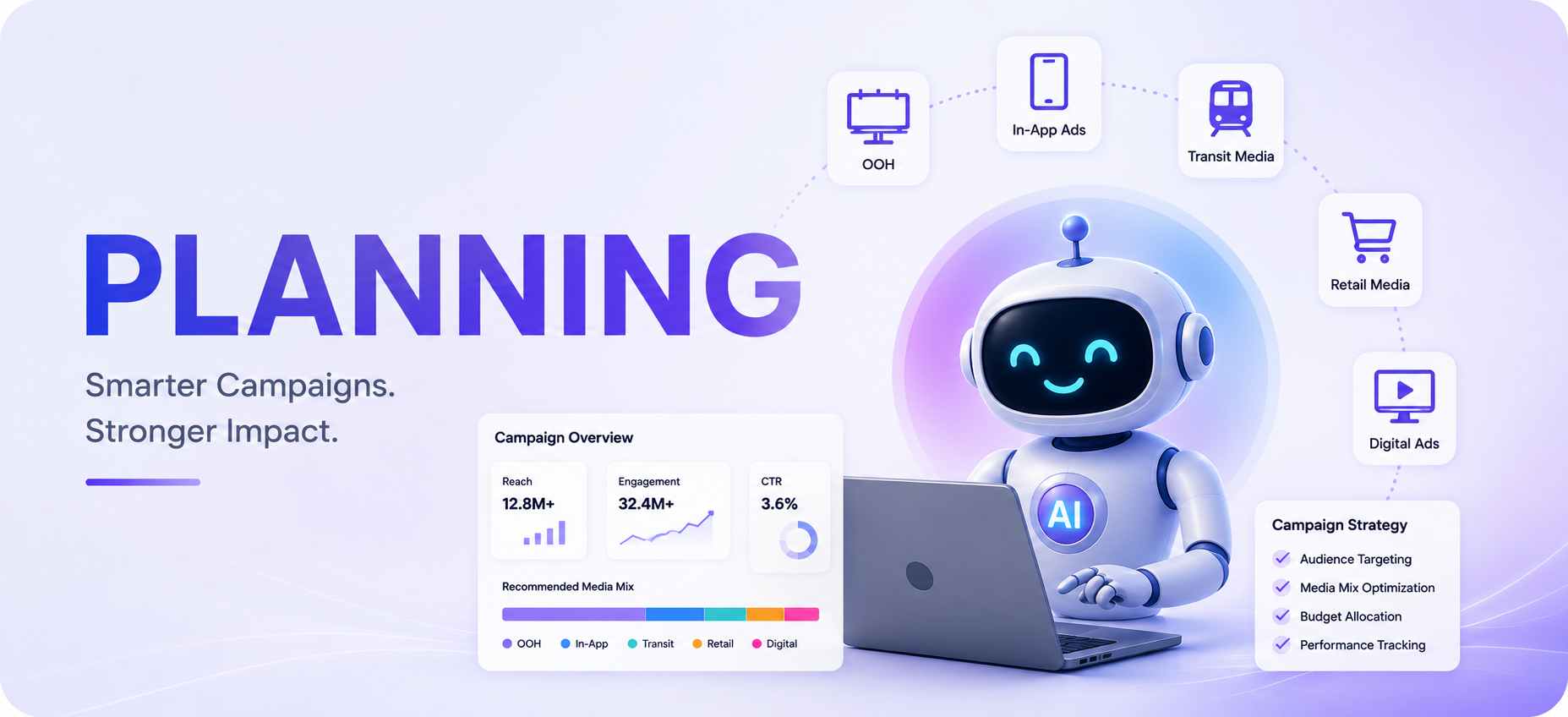
In EraZero, Steve AI acts as the campaign strategist and AI campaign generator. It helps marketers plan campaigns by understanding the objective, audience, budget, location, and media requirement. Rather than manually building a campaign from multiple disconnected inputs, Steve AI guides the planning process and helps brands move from campaign idea to campaign structure faster.
For CMOs, media buyers, and agencies, this changes the role of campaign planning. The process becomes less about starting from scratch and more about refining AI-powered recommendations with strategic human judgment.
Steve AI: The Campaign Strategist for Modern Advertising
Steve AI is not just a basic automation tool. It works like an AI-powered campaign strategist that helps brands think through their advertising plan more clearly.
A campaign strategist needs to answer important questions:
Which audience should the brand target?
Which channel is most relevant?
Should the campaign focus on OOH, in-app, transit, retail, or a multi-channel mix?
What budget split makes sense?
How can the campaign move from awareness to action?
Steve AI supports this planning process by helping marketers structure campaigns around business goals. For example, a real estate brand may need hyperlocal OOH visibility near business districts and residential zones. A food delivery brand may need in-app advertising and outdoor placements around high-order locations. A retail brand may need a combination of OOH, in-app ads, and retail media to influence both awareness and purchase decisions.
This is where Steve AI becomes useful. It helps marketers move from broad campaign ideas to more organized media planning decisions.
Speed: Steve AI Makes Planning Faster
The biggest difference between Steve AI and traditional media planning is speed.
In a traditional setup, planning can take several days or even weeks. Teams need to collect briefs, speak to vendors, compare media options, check availability, prepare budgets, and coordinate creative production.
With media planning automation, much of this work can be accelerated. Steve AI can help generate a campaign plan based on key inputs such as audience, location, budget, and campaign objective. This gives teams a faster starting point and reduces repetitive manual work.
For CMOs and agencies managing multiple campaigns, this speed is extremely valuable. Faster planning means brands can respond to trends, seasonal offers, product launches, and market opportunities without long delays.
Channel Selection: From Manual Guesswork to AI-Guided Planning
Traditional media planning often depends on experience and available vendor relationships. While this can be useful, it may also limit campaigns to familiar formats or commonly used channels.
An AI campaign generator like Steve AI can help expand decision-making by comparing multiple advertising formats. A brand may need to choose between OOH advertising, DOOH, in-app advertising, transit media, retail media, cinema, radio, TV, print, or drone show advertising.
Instead of treating each channel separately, Steve AI can help marketers think through the right media mix based on the campaign goal. For example, OOH may build mass visibility, in-app ads may drive engagement, transit media may increase commuter reach, and retail media may influence purchase decisions near the point of sale.
This does not remove the role of the media planner. It gives the planner a stronger foundation to review, refine, and approve.
Audience Targeting Becomes More Precise
Audience targeting is another major area where AI campaign planning improves the process.
In manual planning, teams may define audiences using broad categories such as age, income, location, interest, or market segment. AI can make this more precise by combining audience behavior, location signals, campaign intent, and channel-level insights.
For example, a real estate brand may want to reach working professionals in a specific city. Traditional planning may suggest billboard placements near business districts. AI planning can go further by combining OOH visibility with in-app advertising, transit media, and hyperlocal targeting to improve campaign recall.
This is especially useful for brands that want to connect offline and digital touchpoints. A customer may see a billboard during their commute, later see an in-app ad, and then interact with the brand online. Steve AI helps plan this journey more strategically.
Creative Planning: Steve AI and Sara AI Work Together
Traditional media planning often separates media strategy from creative development. The media team decides where the campaign will run, while the creative team develops visuals and messaging separately. This can create delays and gaps between strategy and execution.
In an AI-powered workflow, campaign strategy and creative planning can become more connected. Steve AI can support the campaign strategy, while creative tools like Sara AI can help with ad creative generation for different formats.
This is useful because every format needs a different creative approach. A billboard needs short, bold messaging. An in-app ad needs action-driven copy. A transit campaign needs simple visuals that work in high-movement environments. A retail display needs messaging that influences purchase decisions.
When campaign strategy and creative generation work together, brands can move faster from planning to execution.
Budget Allocation Becomes More Strategic
Budget planning is one of the most sensitive parts of advertising. In traditional planning, budgets are often distributed based on previous campaigns, vendor suggestions, or channel preference.
AI campaign planning can improve this by helping brands compare the role of each channel. It can support decisions such as how much budget should go to OOH for awareness, how much to in-app ads for engagement, and how much to transit media for frequency.
For media buyers, this makes budget conversations more strategic. Instead of only asking, “Where can we buy inventory?” teams can ask, “Which combination of channels best supports the campaign goal?”
Steve AI helps make this planning process more objective and structured.
Execution and Campaign Management Become More Unified
Traditional media planning often becomes fragmented during execution. One team handles OOH, another handles digital, another coordinates creative, and another tracks reporting. This can lead to communication gaps and slower decision-making.
An AI-powered platform can bring planning, creative generation, inventory discovery, campaign execution, and reporting into one place. EraZero positions itself as a unified advertising platform where brands can manage multiple ad formats from a centralized dashboard.
For agencies, this is important because they often manage several clients and campaigns at the same time. A unified workflow improves visibility, reduces manual follow-ups, and helps teams work faster.
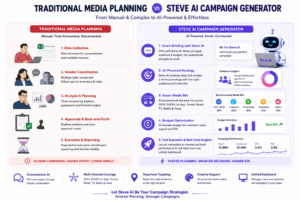
AI Campaign Generator vs Traditional Media Planning: Key Differences
| Feature | Traditional Media Planning | Steve AI Campaign Generator |
| Planning Speed | Slower and manual | Faster and AI-assisted |
| Campaign Strategy | Built through manual research | Guided by Steve AI as campaign strategist |
| Channel Selection | Based on experience and vendor inputs | Based on AI-powered media recommendations |
| Audience Targeting | Broad audience assumptions | More location, behavior, and context-driven |
| Creative Planning | Separate creative workflow | Connected with AI creative generation tools |
| Budget Planning | Manual allocation | Smarter media mix and budget suggestions |
| Campaign Execution | Fragmented across teams and tools | More unified and streamlined |
| Scalability | Difficult for multiple campaigns | Easier to scale across markets and formats |
| Human Control | High | Still required for final approval and strategy |
Is AI Campaign Planning Better Than Manual Planning?
AI campaign planning is better when brands need speed, scale, automation, and multi-channel coordination. It is especially useful for CMOs, agencies, and media buyers who want to reduce manual work and make faster campaign decisions.
However, traditional media planning still has value. Human expertise is important for brand judgment, market understanding, vendor negotiation, cultural context, and creative quality. Steve AI can recommend, structure, and guide, but humans still need to review and approve the final strategy.
The best approach is not AI versus humans. It is AI plus human strategy.
What Changes for CMOs, Media Buyers, and Agencies?
For CMOs, Steve AI brings faster decision-making and better visibility across campaign planning. For media buyers, it reduces repetitive research and helps compare options more efficiently. For agencies, it improves scalability, allowing teams to manage more campaigns without increasing manual workload.
AI campaign generators also change the role of media teams. Instead of spending most of their time collecting data, building plans, and coordinating manually, teams can focus more on strategy, campaign quality, performance improvement, and client growth.
The shift from traditional media planning to AI campaign generation is one of the biggest changes in modern advertising. AI helps brands plan faster, choose smarter channels, improve audience targeting, generate creative ideas, and manage campaigns more efficiently.
Traditional media planning depends on experience and manual coordination. Steve AI adds speed, automation, and campaign strategy intelligence to the process. For the best results, brands should combine both: the efficiency of AI and the judgment of experienced marketers.
As platforms like EraZero continue to bring Steve AI campaign strategy, media planning automation, creative tools, smart media aggregation, and multi-channel execution into one ecosystem, the future of advertising will become faster, more connected, and more intelligent.