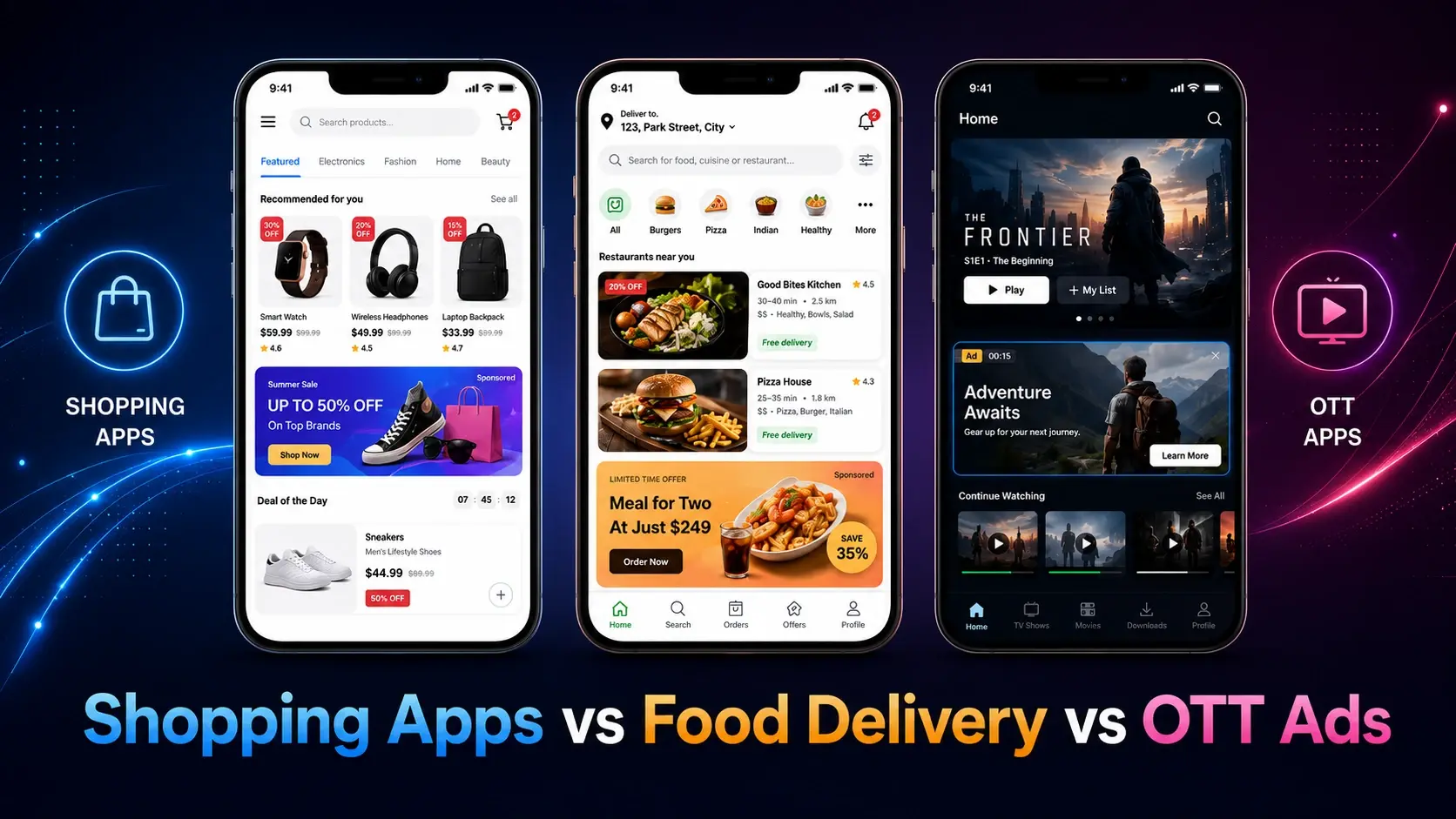
In-app advertising has become one of the most powerful ways for brands to reach mobile-first consumers. But for media buyers, ecommerce brands, and FMCG marketers, one common question remains: which app category performs best for advertising — shopping apps, food delivery apps, or OTT platforms?
The answer depends on the campaign goal. Shopping apps are strong for purchase intent and conversions. Food delivery apps are effective for hyperlocal and impulse-driven campaigns. OTT platforms work best for storytelling, awareness, and premium brand recall. Choosing the right app category can make the difference between a campaign that gets impressions and a campaign that drives measurable results.
Why In-App Advertising Works for Modern Brands
Consumers today spend a large part of their digital time inside mobile apps. Unlike open web advertising, in-app ads allow brands to reach users in a more controlled, contextual, and behavior-rich environment.
For example, a shopper browsing fashion on AJIO or Flipkart is already in a product discovery mindset. A user ordering lunch on Zomato or Swiggy is making a real-time consumption decision. A viewer watching content on JioHotstar, SonyLIV, ZEE5, or MX Player is in an entertainment environment where video storytelling can create stronger recall.
This is why in-app advertising is not a one-size-fits-all media format. Each app category serves a different marketing objective.
Shopping Apps Ads: Best for High-Intent Conversions
Shopping apps ads are ideal for brands that want to reach users close to the purchase stage. Platforms like Amazon, Flipkart, AJIO, Meesho, BigBasket, and Zepto allow brands to place ads where users are actively searching, browsing, comparing, and buying.
For ecommerce brands, D2C brands, fashion labels, beauty brands, electronics sellers, and FMCG companies, shopping apps can deliver strong performance because the audience already has buying intent.
Common ad formats include sponsored product ads, banner ads, display ads, product listing ads, category placements, and homepage takeovers. These placements work especially well during sale periods, festive campaigns, new product launches, and category-specific promotions.
Shopping apps perform best when your goal is:
- Product discovery
- Sales and conversions
- Retargeting interested buyers
- New SKU launches
- Marketplace visibility
- Cart and checkout influence
For example, an FMCG brand launching a new snack product may use BigBasket or Zepto for quick-commerce visibility, while a fashion brand may choose AJIO or Flipkart to reach users browsing apparel and lifestyle categories.
Food Delivery App Advertising: Best for Impulse and Hyperlocal Reach
Food delivery app advertising is highly effective because it reaches users during frequent, need-based moments. Platforms like Zomato and Swiggy are not just delivery apps; they are high-intent consumer environments where people make quick decisions around meals, beverages, snacks, groceries, and lifestyle convenience.
For FMCG brands, beverage brands, QSR chains, cloud kitchens, packaged food companies, and local businesses, food delivery apps offer powerful contextual targeting.
Food delivery app advertising performs well because users are already thinking about consumption. A soft drink ad placed during dinner ordering, a dessert brand shown after a meal search, or a snack offer during evening hours can influence decisions at the right moment.
Food delivery apps are best for:
- Hyperlocal targeting
- Time-based campaigns
- Food and beverage promotions
- Restaurant and QSR visibility
- FMCG sampling and discovery
- Quick conversion campaigns
- Festive and occasion-based offers
For example, a beverage brand can target lunch and dinner slots in metro cities, while a snack brand can run evening campaigns in high-ordering zones. This makes food delivery apps especially useful for brands that want fast engagement and location-specific impact.
OTT Ads: Best for Awareness, Storytelling, and Premium Reach
OTT ads are best suited for brands that want high-impact storytelling. Platforms like JioHotstar, SonyLIV, ZEE5, MX Player, SunNXT, Discovery+, and Tata Play give advertisers access to engaged audiences watching shows, movies, sports, regional content, and live events.
OTT advertising is different from shopping or food delivery advertising because users are not necessarily in buying mode. They are in a content consumption mindset. This makes OTT ideal for awareness, brand consideration, and emotional storytelling.
OTT ads work well for ecommerce brands, FMCG brands, automobiles, BFSI, entertainment, consumer electronics, real estate, and premium lifestyle brands.
Common OTT ad formats include pre-roll video ads, mid-roll ads, pause ads, display banners, masthead placements, branded content, and sponsorships. For big-ticket campaigns, OTT platforms are especially useful during sports events, movie premieres, reality shows, and festive content seasons.
OTT ads perform best when your goal is:
- Brand awareness
- Video storytelling
- Premium audience reach
- Regional targeting
- Large-scale campaign launches
- Brand recall
- Sponsorship-led visibility
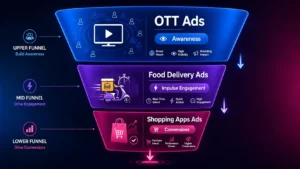
For example, an ecommerce brand promoting a festive sale can use OTT video ads for mass awareness and then use shopping apps ads for conversion. This combination creates a strong full-funnel campaign.
Shopping Apps vs Food Delivery vs OTT: Which Performs Best?
There is no single winner. The best app category depends on what the brand wants to achieve.
If the goal is direct sales, shopping apps ads usually perform best because users are already browsing products. If the goal is impulse purchase or city-level activation, food delivery app advertising is highly effective. If the goal is awareness and brand recall, OTT ads are the strongest choice.
For ecommerce brands, shopping apps and OTT can work together. OTT builds awareness, while marketplace ads convert demand. For FMCG brands, food delivery apps and quick-commerce apps are powerful because they connect product discovery with immediate consumption. For media buyers, the best strategy is often to combine all three categories based on the funnel stage.
How EraZero Helps Brands Choose the Right App Category
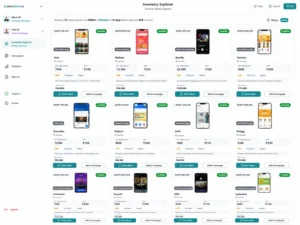
EraZero helps brands plan, execute, and track in-app advertising across leading app categories. Instead of manually comparing platforms, brands can use EraZero’s AI-powered advertising infrastructure to identify the right app mix based on audience, objective, geography, budget, and campaign goal.
Whether the requirement is shopping apps ads, OTT ads, food delivery app advertising, or a combined in-app media plan, EraZero enables smarter app selection and measurable campaign execution.
For example, an FMCG brand can use EraZero to plan visibility across Swiggy, Zomato, Zepto, BigBasket, and JioHotstar. An ecommerce brand can combine Flipkart, AJIO, Meesho, and OTT platforms for both performance and awareness. A media buyer can compare platforms, formats, and campaign objectives from one integrated planning approach.
The smart in-app advertising strategy
Choose shopping apps when your campaign is conversion-led. Choose food delivery apps when your campaign needs hyperlocal, time-sensitive, or impulse-based engagement. Choose OTT when your campaign needs mass reach, premium storytelling, and stronger brand recall.
The smartest in-app advertising strategy is not choosing one category blindly. It is choosing the right app category based on intent, audience behavior, and business objective. With platforms like EraZero AI, brands can move from guesswork to AI-powered app advertising decisions.