Modern advertising is no longer about choosing one channel and hoping it works. Today’s customers move across physical locations, mobile apps, roads, metro routes, retail spaces, and digital screens throughout the day. A person may see a billboard during their commute, interact with an in-app ad during lunch, notice a digital screen in the evening, and recall the brand again while travelling by metro.
This is why multi-channel advertising AI is becoming important for brand managers, performance marketers, and agencies. AI helps brands connect different media channels into one smarter campaign strategy instead of managing every format separately.
For brands that want visibility, engagement, and measurable action, combining in-app, OOH, DOOH and transit media can create stronger campaign impact. With platforms like EraZero and its marketing campaign strategist, Steve AI, brands can plan integrated campaigns faster, choose better media mixes, and launch campaigns across multiple touchpoints with more confidence.
What Is Multi-Channel Advertising AI?
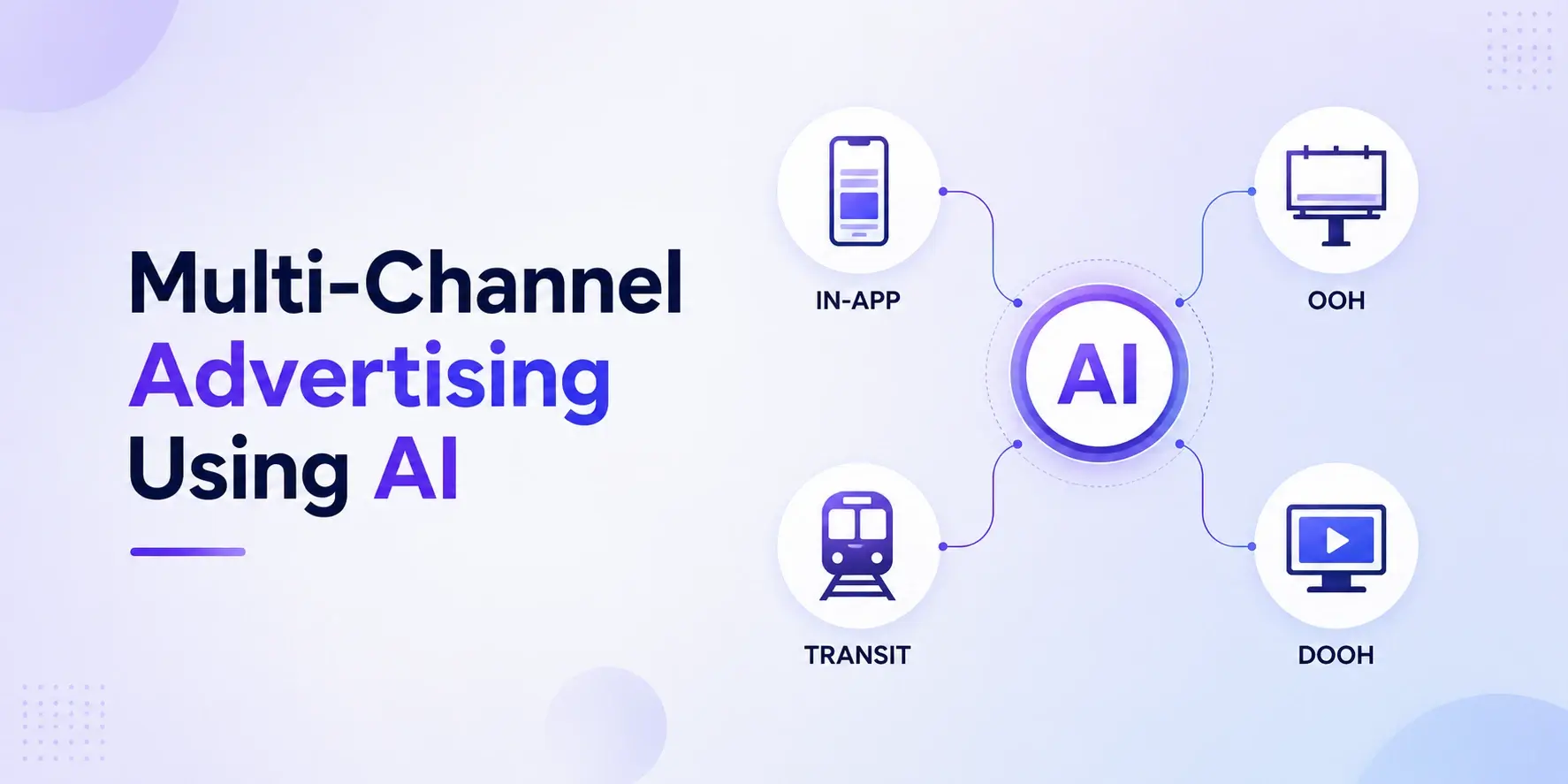
Multi-channel advertising AI is the use of artificial intelligence to plan, optimize, and manage campaigns across multiple media formats. Instead of running in-app ads, OOH, transit media, and DOOH as separate campaigns, AI helps connect them into one integrated strategy.
In a traditional setup, each channel often has a separate planning process. The OOH team may handle billboards, the digital team may handle app ads, another vendor may handle transit branding, and another team may manage DOOH screens. This creates fragmented planning, inconsistent messaging, and difficulty measuring the overall campaign impact.
AI changes this by helping marketers answer important questions:
Which channels should we combine?
Which audience should we target?
Which locations matter most?
How should the budget be split?
Which creative works best for each format?
How can offline visibility support digital action?
This is where AI-powered media planning becomes useful. It helps brands build integrated campaigns that are faster, smarter, and more connected.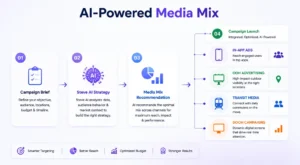
Why Brands Need Integrated Campaigns
Customers do not experience brands in one place. They move between offline and online environments throughout the day. A single-channel campaign may create awareness, but an integrated campaign creates repeated exposure and stronger recall.
For example, a food delivery brand can use OOH near office areas, in-app ads during lunch hours, transit media on metro routes, and DOOH screens near malls or high-footfall areas. A real estate brand can use billboards near business districts, metro branding along commuter corridors, and app retargeting to bring interested buyers back to enquiry forms. A retail brand can use DOOH near shopping zones, in-app ads for offers, and transit media for daily recall.
The strength of integrated campaigns is frequency. When the same audience sees a brand across multiple touchpoints, the message becomes more memorable.
How In-App Advertising Supports Precision Targeting
In-app advertising helps brands reach users inside mobile apps where they spend time daily. This channel is useful for engagement, offers, app installs, lead generation, store visits, and digital conversions.
In a multi-channel campaign, in-app ads work well after awareness has been created through OOH or DOOH. For example, someone may first notice a billboard and later see an in-app ad with a clear call to action. This creates a bridge between offline awareness and digital response.
AI helps improve in-app advertising by identifying audience segments, recommending app categories, personalizing creatives, and matching campaign goals with user behavior. Instead of targeting everyone, brands can focus on users who are more likely to engage.
How OOH Advertising Builds Mass Visibility
OOH advertising is one of the strongest formats for brand visibility. Billboards, hoardings, gantries, bus shelters, and outdoor screens help brands become visible in high-traffic locations.
OOH works especially well for campaigns that need awareness, trust, and local recall. A brand launching in a new city can use outdoor media to create presence. A retail brand can promote offers near stores. A real estate developer can use OOH near business districts and residential corridors.
AI helps OOH planning by supporting location selection, audience mapping, budget allocation, and campaign timing. With AI, brands can move beyond choosing popular locations and start choosing locations that match the campaign objective.
How Transit Media Strengthens Daily Recall
Transit media is powerful because it reaches people during daily movement. Metro branding, bus wraps, auto branding, airport media, railway ads, and station panels help brands connect with commuters repeatedly.
For many brands, transit media is ideal for frequency. A person who sees the same campaign every day during travel is more likely to remember the brand. Transit media also works well for city-level campaigns, product launches, local promotions, and high-reach awareness campaigns.
AI can help brands decide which transit routes, stations, or vehicle formats make sense based on audience movement and location relevance.
How DOOH Makes Outdoor Campaigns More Dynamic
DOOH, or digital out-of-home, adds flexibility to outdoor advertising. Unlike static billboards, DOOH screens can display different creatives based on time, location, audience context, or campaign need.
For example, a QSR brand can show breakfast offers in the morning and dinner offers in the evening. A retail brand can update promotions during weekends. A travel brand can promote destination offers near airports or metro stations.
When AI is added to DOOH planning, brands can make smarter decisions about what message to show, where to show it, and when to run it. This makes DOOH a strong bridge between traditional outdoor visibility and digital-style flexibility.
How Steve AI Helps Plan Integrated Campaigns
Steve AI acts as campaign strategist. For a brand manager or agency, this means campaign planning can begin with a simple brief: objective, audience, location, budget, and preferred channels.
Steve AI can help structure the campaign strategy by recommending how different channels should work together. For example, it may suggest OOH for awareness, in-app ads for engagement, transit media for frequency, and DOOH for dynamic messaging.
This helps teams move faster from idea to execution. Instead of building a media plan manually across multiple vendors and spreadsheets, marketers can use AI to create a smarter starting point and then refine it with human strategy.
Example: A Multi-Channel Campaign in Action
Imagine a fashion retail brand launching a festive sale across a major city.
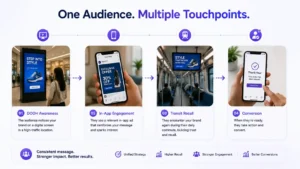
The brand can use OOH billboards near shopping districts to create awareness. DOOH screens near malls can show dynamic offers. Transit media on metro routes can build daily recall among commuters. In-app ads can target nearby shoppers with sale reminders and store visit prompts.
Together, these channels create one connected journey. The customer sees the brand outdoors, remembers it during commute, notices the offer near a shopping zone, and receives a mobile reminder at the right time.
This is the power of integrated campaigns. Each channel plays a specific role, but AI helps connect them into one strategy.
Benefits of Multi-Channel Advertising AI
AI-powered integrated campaigns offer several advantages:
They improve campaign planning speed.
They help brands choose the right media mix.
They connect offline visibility with digital engagement.
They improve audience targeting and location relevance.
They support better budget allocation across channels.
They help agencies manage campaigns more efficiently.
They create stronger brand recall through repeated exposure.
For performance marketers, AI also helps connect brand awareness with measurable action. For agencies, it reduces manual planning work and improves campaign scalability.
Multi-channel Advertising Using AI
Running campaigns across in-app, OOH, transit, and DOOH is no longer just a media buying decision. It is a strategy decision. Brands need to understand how each channel supports the customer journey and how they can work together to improve reach, recall, engagement, and conversions.
With multi-channel advertising AI, marketers can plan smarter integrated campaigns that combine offline impact with digital precision. OOH builds visibility, transit media creates frequency, DOOH adds dynamic messaging, and in-app ads drive action.
EraZero’s Steve AI helps bring these channels together through AI-powered campaign strategy, media mix planning, hyperlocal targeting, and faster execution. For brand managers, performance marketers, and agencies, the future of advertising is not single-channel. It is integrated, intelligent, and AI-powered.